
Glioma Near Functional Brain Areas: Surgical Questions for Shanghai
eloquent area glioma surgery assessment Shanghai
When a glioma lies close to language or movement areas, the central question is how much tumour can be removed while protecting speech, mobility and independence. Shanghai’s functional neurosurgery resources make it possible to review imaging, mapping, the surgical approach and care after surgery as one connected plan.
By eastmedgo editorial ·
On this page
Define the tumour and the functions at stake
This article concerns adult glioma near important functional regions, not every brain tumour. Bring the MRI studies and any previous pathology, including the integrated diagnosis when available; glioblastoma is not a synonym for all gliomas. Record speech, movement, reading, memory and seizure symptoms with their onset and progression. Describe work and daily activities that depend on those abilities. These details help the team discuss a personalised objective rather than assuming that the same extent of resection is appropriate for everyone with a lesion in a similar location.
Understand what scans and mapping contribute
MRI shows the lesion and its relationship to brain structures, while functional tests help assess abilities that may be at risk. During suitable operations, stimulation and monitoring can help the surgeon identify important areas as the procedure proceeds. These techniques add information; they do not create a perfect boundary between tumour and essential brain tissue or remove all uncertainty. Ask which preoperative and intraoperative assessments are proposed, what each contributes and how a concerning functional response would alter the operation. The practical value is how the information informs a decision to continue, pause or limit removal.
Sources and references: [1] [2]
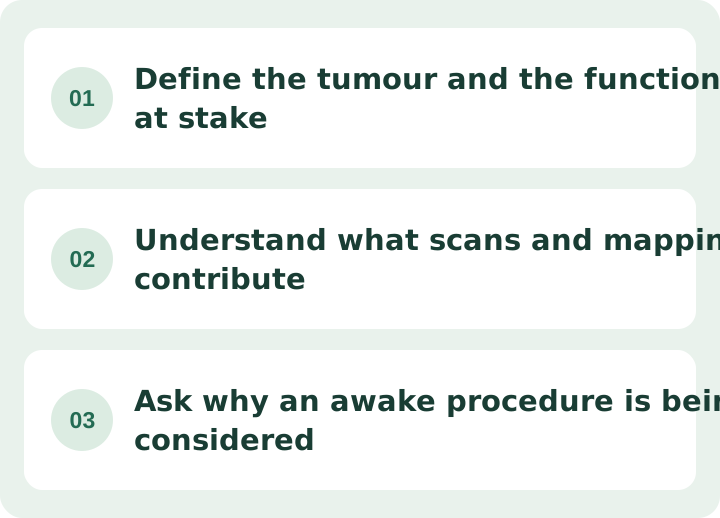
Ask why an awake procedure is being considered
Awake brain surgery allows selected patients to perform tasks such as naming pictures, speaking or moving while the team monitors function. Depending on the plan, a person may be awake for only part of the operation. It is not required for every glioma near a functional region, and suitability depends on the surgical and anaesthetic assessment and the ability to participate. Discuss anxiety, communication difficulties and existing deficits before agreeing to a plan. Ask how preparation, comfort and unexpected difficulty with testing would be handled, and what alternative approach the team would consider.
Sources and references: [2]
Make language preparation part of the clinical plan
Tell the team every language you use, the language needed for work or family life and any recent changes in fluency, naming or comprehension. A routine translated conversation is not the same as a validated intraoperative language task. Ask which language or languages the team can assess, who will conduct the tasks and whether you can practise them beforehand. Availability must be confirmed for this individual case; the existence of an awake surgery service does not establish that testing is possible in every language. An unresolved communication problem should be addressed before the operation is scheduled.
Discuss stopping rules and meaningful risks
Ask what findings would lead the surgeon to leave tumour behind and how that possibility would affect later treatment. Maximum removal and maximum safe removal are not interchangeable goals. Surgery can cause temporary or permanent problems with speech, movement, vision or memory, and also carries risks such as bleeding, infection, seizures and stroke. Mapping can help reduce avoidable injury but cannot guarantee preserved function. Discuss what different deficits would mean for daily independence and who would assess and support recovery. A clear explanation of tradeoffs is more useful than a percentage detached from your anatomy and baseline function.
Use Huashan’s functional glioma resources for specific questions
The advantage of a Shanghai review is a joined discussion of tumour removal and preservation of the abilities that matter most to you. Huashan Hospital, Fudan University describes functional navigation, intraoperative electrophysiological monitoring, MRI and awake procedures for glioma near language or motor areas in its hospital specialty overview. Together these resources can help the team compare surgical strategies against your scans and baseline language or movement, then plan rehabilitation and any additional treatment. Read the Glioma overview and ask which assessments and techniques would actually shape your operation.
Sources and references: [3]
Prepare records, recovery support and a conditional budget
Send complete MRI files, reports, prior operative and pathology records, current medicines and a timeline of seizures or neurological changes. Include assessments of language or movement if already performed. Ask for separate estimates covering consultation, additional imaging or testing, surgery, anaesthesia, inpatient care and rehabilitation; clarify which items depend on the final plan. Arrange an accompanying person and discuss how assistance would be provided if communication or mobility worsened temporarily or permanently. Travel dates should allow clinical reassessment and discharge advice rather than assume an uncomplicated recovery or immediate fitness to fly.
eastmedgo knows the Chinese medical system and can help match your tumour location, pathology and functional priorities with relevant Shanghai neurosurgery resources. We help organise imaging, translation, appointments and the handover for rehabilitation and follow-up at home. Explore eastmedgo services, then contact eastmedgo with your main question and available records.
Plan beyond the operation
A good surgical plan also explains what happens afterward. Postoperative imaging and the tissue diagnosis guide any additional tumour treatment, while speech, movement and daily function may need prompt rehabilitation. Before leaving Shanghai, obtain a written summary of imaging, pathology, medicines and rehabilitation, with named responsibilities for the Shanghai and home teams. Seek urgent local care for new or rapidly worsening neurological symptoms.
Common questions
Does awake surgery mean I will feel brain surgery happening?
Anaesthesia and comfort are actively managed, and the awake period is planned around functional testing. Ask the anaesthetist which parts you may be awake for, what sensations to expect and how discomfort or anxiety would be addressed. The exact approach is individual.
Sources and references: [2]
If some tumour is left, does that mean the operation failed?
Not necessarily. Limiting removal may be a deliberate decision to protect important function. The team should explain the remaining tumour, the tissue diagnosis and the next treatment or monitoring plan. The meaning of residual disease depends on the particular glioma and clinical situation.
Can an interpreter alone guarantee language testing in my language?
No. Everyday interpretation and intraoperative language assessment serve different purposes. The surgical team needs to confirm suitable tasks, personnel and your ability to perform them reliably. Resolve this before travel or scheduling rather than assuming every language can be accommodated.