CAR-T treatment in ChinaLower costs, faster progress towards treatment.
When high costs and long waits stand in the way of treatment, China deserves serious consideration: defined treatment timelines, substantial cost differences, and CAR-T research and clinical teams at the global forefront.
Time and costs use SinoUnited's published programme as an example; individual circumstances require confirmation. Research statistics are as of April 2024.View the evidence
Treatment costs can be much lower.
For families paying for CAR-T themselves, cost differences directly affect affordability. Integrated treatment packages for international patients are available in Shanghai.
Approximately one-third of the Western market cost.
Shanghai SinoUnited CAR-T Center currently states publicly that its package costs approximately this proportion of comparable treatment in Western markets: 1/3, equivalent to approximately this reduction in spending: 2/3。
The package quotes CAR-T treatment together with medical services for admissions for collection, infusion and monitoring, helping international patients understand major medical expenses before departure.
This is the hospital's comparison, without published itemised amounts. It is not a comparison of out-of-pocket costs after insurance or an eastmedgo quote.
Review the full budget first, then decide whether to travel.
CAR-T treatment and medical services for two admissions: collection, then infusion and monitoring.
Allow additional funds for
Bridging treatment, complication management, hospital stays beyond the package, subsequent follow-up and personal expenses such as flights and accommodation.
Factors affecting your actual costs
Product selected, condition, hospital and length of stay; specific inclusions are governed by the written estimate.
4–8 weeks to progress towards infusion.
SinoUnited's published pathway: typically approximately 4–8 weeks from first contact to infusion, with the complete China trip including recovery lasting approximately two months. Begin with records assessment overseas, then arrange travel in stages.
First Shanghai visit · Approximately 1 week
Tests and cell collection
Complete hospital assessments and T-cell collection in preparation for manufacturing.
Cell manufacturing · Approximately 3–4 weeks
You may not need to remain in China throughout
If your condition permits, you may return home while cells are manufactured. Your doctor determines whether bridging therapy is needed.
Return visit to Shanghai · Approximately 2–3 weeks
Infusion and inpatient observation
Complete conditioning, infusion and recovery monitoring; arrange the return trip once discharge criteria are met.
These timings reference SinoUnited's published pathway. Assessment, manufacturing and recovery depend on your condition. Two months describes travel duration, not a deadline for cure.
A 72-year-old patient with myeloma received CAR-T in Shanghai. A week of high fever occurred during treatment, with continuous monitoring by the medical team.
A hospital's published individual case, not an eastmedgo service case. It does not represent other patients' timelines or outcomes.
China is a major global centre for CAR-T research and development.
Research scale, original products and clinical teams together underpin treatment expertise. For patients with limited benefit from previous treatment, this offers technological developments and clinical research opportunities worth careful assessment.
780studies
Registered CAR-T studies in China
An analysis published in 2025 included 1,580 studies worldwide, with 780 in China—approximately half and the largest number.
In June 2026, China approved satri-cel, the world's first CAR-T product approved for a solid tumour.
It is for patients with unresectable advanced gastric/gastro-oesophageal junction adenocarcinoma that is CLDN18.2-positive and HER2-negative, progressing after at least two prior treatment lines. This is a specific achievement in extending China's clinical CAR-T use beyond blood cancers.
If existing treatment options have become limited, explore whether a trial matches your diagnosis, target and previous treatment. Each study's eligibility, risks, location and arrangements for accepting international patients require separate confirmation.
Study numbers indicate research activity, not better results for every therapy. Approved treatments and clinical trials also differ in eligibility and maturity of evidence.
Let a team with long-standing CAR-T research experience support each step of treatment.
Treatment expertise includes patient assessment, cell therapy, adverse-effect management and long-term follow-up. Ruijin Hospital's lymphoma team is a specific example of this specialist experience in China.
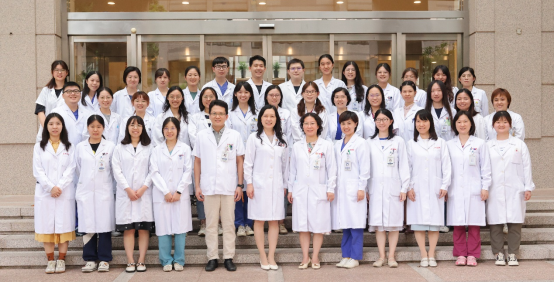
Ruijin Hospital haematology teaching team · Shanghai Jiao Tong University course report, 2026; not a treatment scene.
Shanghai Ruijin Hospital
Haematology and lymphoma specialist team
From CAR-T research to comprehensive treatment management.
Clinical evidence in Chinese patientsLed a multicentre real-world axicabtagene ciloleucel study; published a related commentary in the New England Journal of Medicine in 2023.
Experience with nearly 100 treated patientsCumulative experience reported in 2023, spanning pretreatment assessment, management during therapy and long-term monitoring.
Multidisciplinary management of complex problemsWorks with intensive care, neurology, infectious diseases and other teams to plan adverse-effect management and emergency responses.
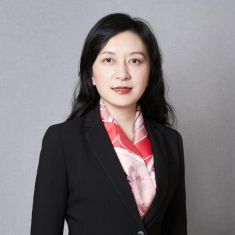
Chief physician · Professor Department of Haematology, Ruijin Hospital
Leading multicentre real-world CAR-T research in China, with a focus on relapsed and refractory lymphoma.
From molecular classification and resistance research in lymphoma to cell therapy, Zhao Weili's team connects clinical questions with multicentre studies. Its research and clinical focus includes diffuse large B-cell lymphoma and relapsed/refractory lymphoma, linking subtype, prior treatment and cell therapy assessment.
Lead of the lymphoma project awarded the 2018 National Science and Technology Progress Award, Second Prize · Original award reportLead team for multicentre real-world CAR-T research in Chinese patients · Original research report
The specialist's experience reflects publicly documented research and clinical work. Ruijin's lymphoma experience and SinoUnited's cost and timing information refer to different institutions. Confirm the treating team, product and dates for your specific arrangements.
Before deciding, get the key questions answered.
Alongside cost, timing and technological advantages, establish whether this treatment fits your situation.
What should I prepare to find out whether I am eligible?
First organise existing diagnosis and pathology records, every previous treatment line, recent imaging and important laboratory tests. CAR-T products and trials differ in disease, age, target and prior-treatment requirements; the hospital assesses individual eligibility. You do not need to arrange new tests yourself just to start a consultation.
Costs differ by product and medical plan. The hospital currently publishes a relative cost comparison; individual amounts require assessment. State your budget during consultation and request itemised medical, coordination, travel and potential additional costs.
Can I start immediately, and must I stay in China throughout?
Records discussions can begin while you are overseas. The actual start depends on assessment results, bed availability and manufacturing arrangements. In SinoUnited's example pathway, you may return home after collection while awaiting manufacturing if your condition permits, then return to Shanghai for infusion. The medical team assesses fitness to travel.
Which CAR-T risks should I understand carefully?
Serious adverse effects can include cytokine release syndrome, neurological toxicity and infections. A specialist team must have monitoring and management capabilities and discuss benefits, risks and alternatives for the specific product.
Discuss language needs, caregiver support and your country during consultation. Confirm interpreting, accommodation, hospital communication and costs before departure. Before returning home, clarify appointments, tests and emergency contacts with the treating team.
Get your cost and timing arrangements first, then decide whether to come to China.
Tell us your diagnosis, previous treatments and main concerns. We help communicate with hospitals about records, budgets and travel arrangements.
The initial service consultation is free. The accepting hospital and doctors provide medical assessment and treatment advice.
Information is compiled from public approval documents, studies and prices and does not replace an individual medical assessment. Research and cost figures each have a defined scope; published prices are not personal international patient quotes. Costs are discussed on a self-funded basis without Chinese health insurance or free-drug assistance.