Proton radiotherapyPublished course-cost reference: RMB 170,000,
to seek less radiation to normal tissues.

For suitable patients whose tumours lie near critical organs, or children needing radiotherapy, protons can reduce radiation doses to normal tissues. Shanghai Ruijin announced a maximum of RMB 170,000 per course for the same indication in 2023. Individual dose benefits and total fully self-funded foreign-patient costs require separate confirmation.

Free initial service consultation · Understand your options and budget before you travel

Published proton course-cost references
Shanghai Ruijin course cap
Up to RMB 170,000 per course for the same indication; 2023-11 announcement. Current foreign-patient pricing needs confirmation.
Singapore centre course reference
Approximately SGD 45,000–80,000; checked 2026-10-03. Not a direct comparison for the same disease and services.

In 2026, the National Healthcare Security Administration described a government-guided proton course price of approximately RMB 170,000. Coverage of all international patient expenses is unconfirmed, so overseas price differences cannot be calculated from it. View the evidence

Ruijin's announcement dated 2023-11-28 specified a maximum of RMB 170,000 per course for the same indication. The 2026 policy reference is approximately RMB 170,000, not all foreign-patient expenses. View sources

Treat the tumour while seeking less radiation to normal tissue

Protons can reduce dose beyond the target. This dose distribution may be valuable for children or tumours near the brain, spinal cord or other critical organs. Whether it benefits you requires comparison of individual proton and modern photon plans.

Translate organ protection into a dose comparison

Compare normal-tissue doses according to tumour location and treatment extent. A lower dose does not mean a survival benefit in every cancer.

Receive suitable proton treatment in Shanghai

The domestically developed proton system that Ruijin helped develop has received registration and entered clinical use. Treatment can be arranged according to indication, number of fractions and actual availability.

View approval, research and price sources for this page

Use the RMB 170,000 course reference to calculate total self-funded spending

Ruijin's 2023 announcement capped a course for the same indication at RMB 170,000; the 2026 policy also refers to approximately RMB 170,000. Foreign patients should budget fully self-funded without Chinese insurance or free-drug assistance. Simulation, admission and other items require individual confirmation.

Ruijin's historical course cap
RMB 170,000, announcement dated 2023-11
Current individual charges
Confirm international patient price, number of fractions and included items
Costs to check separately
Simulation imaging, planning, anaesthesia, admission, medicines and follow-up
Travel budget
Transport, accommodation and caregiver costs during fractionated treatment are additional

The 2026 policy still references approximately RMB 170,000. Huhuibao reimbursement must not be applied to foreign-patient budgets, and unverified overseas price differences on unequal terms are not calculated.

View approval, research and price sources for this page

Finding treatment that fits you
starts with the reports you already have.

Clarifying your disease type and previous treatment helps establish whether this option could form part of a plan for you.

  • An established radiotherapy indicationFirst confirm pathology, stage and treatment goals; not every tumour is suitable.
  • A plan showing benefitThe radiation oncology team compares organ doses with proton and modern photon plans.
  • Need for combined treatmentSurgery, chemotherapy or other medicines may remain necessary; metastatic disease cannot be addressed by local irradiation alone.

Assess the organ-protection goal alongside long-term outcomes

Ruijin's 2023 announcement disclosed early premarket clinical trial results relevant to clinical use. Short-term local control is not long-term cure and cannot be generalised to long-term success rates across cancers.

Local control at 3 months among trial participants
100% reported in the announcement
Acute toxicity
No grade 3 or higher acute toxicity was reported in that trial
Scope of evidence
Short-term device trial, not a general long-term success rate across cancers

Fatigue, skin or mucosal reactions and late organ injury remain possible. Children require long-term monitoring of growth, endocrine effects and other outcomes.

View approval, research and price sources for this page

In Shanghai, let specialist experience
help inform your next step.

Explore Shanghai teams whose research and clinical focus relate to your condition and may warrant further discussion.

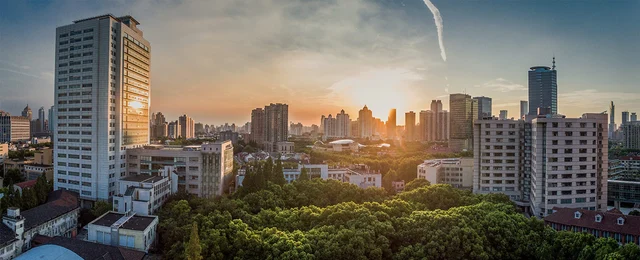
Ruijin Hospital campus photograph, not a proton treatment room

Ruijin Hospital campus photograph, not a proton treatment room

Tumour Proton Center team

Proton planning and comprehensive assessment

Ruijin Hospital, Shanghai Jiao Tong University School of Medicine

The Tumour Proton Center at Ruijin Hospital, Shanghai Jiao Tong University School of Medicine, can assess plans according to cancer type and organ doses. The medical school's original official report documents Ruijin's participation in developing the domestic system, completion of the premarket clinical trial and start of clinical treatment. The hospital determines specific indications and scheduling.

Learn about this Shanghai team

Published research and clinical information can inform hospital selection; specific doctors, drug availability, international clinic charges and appointment dates are subject to confirmation by the hospital.

You do not need to book flights first.
Clarify treatment and costs before you travel.

Tell us your diagnosis, previous treatments and main concerns. We help you communicate about Shanghai consultation requirements, budgets and travel arrangements.

  • Provide pathology, staging and a summary of previous treatment to establish radiotherapy goals
  • Prepare the latest original CT or MRI images to compare irradiation fields
  • If previously irradiated, retrieve complete plans and dose files for cumulative exposure assessment
  • Provide concurrent medication and organ function records; for children, add anaesthetic assessment records

Start the first conversation with the records you already have.

You do not need to arrange new tests yourself for an initial consultation.

Download the records checklist

Get answers to the questions that matter to you
before you travel.

Costs, potential benefit and further treatment deserve specific answers before departure.

Does less radiation to normal tissue mean protons must be more effective?

Not necessarily. Lower normal-tissue dose does not mean longer survival for every tumour. Individual plans and disease-specific evidence matter. Surgery, chemotherapy or other medicines may remain necessary, and metastatic disease cannot be treated through local irradiation alone.

Will RMB 170,000 cover my entire treatment and stay?

No. It is a historical course cap and policy reference. Current international patient pricing, fractions and included items still need confirmation. Simulation, anaesthesia, admission, medicines, follow-up, transport and accommodation require separate checks. Many regimens involve fractionated treatment over several weeks plus simulation and planning time; scheduling depends on disease and dose.

Do I need long-term follow-up after irradiation ends?

Yes. Continue cancer follow-up, side-effect monitoring and other planned anticancer treatment. Children especially need long-term attention to growth, endocrine and other late effects. Short-term local control is not a reason to stop care.

Turn the goal of protecting normal tissues into your treatment plan.

Starting with your condition and budget, we help communicate about consultations and treatment arrangements in Shanghai.

The initial service consultation is free; the treating doctor assesses your specific medical plan.

Sources and image credits

Information is compiled from public approval documents, studies and prices and does not replace an individual medical assessment. Research and cost figures each have a defined scope; published prices are not personal international patient quotes. Costs are discussed on a self-funded basis without Chinese health insurance or free-drug assistance.

  1. Shanghai Jiao Tong University School of Medicine: Ruijin domestic proton system clinical treatment and charges announcement · 2023-11-28
  2. National Healthcare Security Administration: government-guided proton and carbon-ion course costs · 2026-04-23
  3. Proton Therapy Singapore: course-cost questions and answers · Verified 2026-10-03
  4. American Cancer Society and ASCO: proton therapy settings, process and risks · Verified 2026-10-03
  5. National Cancer Institute: late effects of childhood cancer treatment · Verified 2026-10-03

Portraits and hospital images come from the cited public sources or existing project assets. Public accessibility does not constitute a commercial image licence.

Back to all treatments
Ask about this treatment