
All conditions
English
English简体中文繁體中文TürkçeEspañolBahasa MelayuBahasa IndonesiaTiếng ViệtPortuguêsРусский

Pancreatic neuroendocrine tumor
Treatment options in Shanghai

Understand why size alone cannot decide observation or surgery for a small pancreatic neuroendocrine tumor.

Treatment choices, eligibility and timing require an individual assessment by the hospital's clinical team.
Editorial illustration for “A small nonfunctioning pancreatic NET: surveillance or surgery in Shanghai?”
A small nonfunctioning pancreatic NET: surveillance or surgery in Shanghai?

Find treatment options that fit your goal.

Explore specialist care, procedures and research relevant to this condition in Shanghai. Your treating team must confirm what is suitable for you.

Review growth, duct changes and the extent of disease

Explore treatment options

Compare original scans over time using a consistent imaging approach where possible. The review should describe the lesion's position in the pancreatic head, body or tail, its relation to the main pancreatic duct and vessels, and any concerning lymph nodes or distant findings. New duct dilation or convincing growth can matter even when the overall diameter still sounds small. Additional functional imaging may help selected assessments but does not replace anatomical imaging. Ask what each proposed test is intended to resolve, rather than collecting every available scan before the specialist has reviewed the existing files.

View original source View original source
Observation must be an active, documented strategy

Explore treatment options

International expert guidance supports observation for selected small, asymptomatic tumors and individualized decisions in the roughly 1–2 cm range. These are conditional recommendations, not a promise that all lesions below a size threshold are safe to leave alone. Grade, growth, duct findings, age, other illnesses, preferences and access to follow-up alter the balance. A surveillance plan should specify the imaging method, first reassessment, who compares the scans and the triggers for discussing treatment. Ask how missed appointments or living far from the reviewing center would be handled. Surveillance without a responsible clinician and review schedule is not the same strategy.

View original source View original source

The operation's burden depends on where the tumor sits

Explore treatment options

Some selected lesions may allow a tissue-sparing operation, while others require a larger pancreatic resection. Tumors in the head and tail can therefore lead to very different procedures despite similar size. Discuss whether lymph node assessment is needed and whether preserving pancreas compromises an adequate oncological operation. Risks include pancreatic leakage, bleeding, infection and later problems with digestion or blood sugar, with their likelihood depending on the procedure and patient. Ask the surgeon to name the proposed operation and explain why its expected benefit outweighs both surgical harm and the risk of continued observation in your case.

View original source View original source

Treatment choices, eligibility and timing require an individual assessment by the hospital's clinical team.

Choose a hospital with the right expertise.

Start with each specialty's standing, then see the specific care it offers for this condition. Fudan University Shanghai Cancer Center

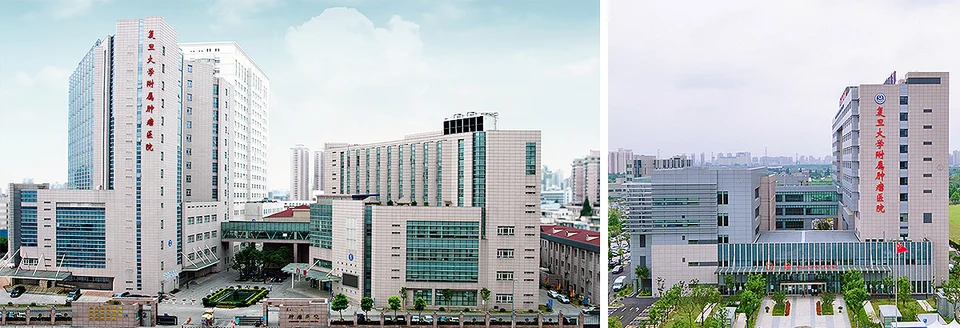
Photograph of Fudan University Shanghai Cancer Center
Fudan University Shanghai Cancer Center

Fudan University Shanghai Cancer Center

Pancreatic tumours
For pancreatic tumours, explore resectability, perioperative treatment and comprehensive care plans. Different pathological types require separate assessment.
What the Shanghai resource can add to this decision
A small nonfunctioning pancreatic neuroendocrine tumour does not always call for immediate surgery, but surveillance also needs sound grading and an imaging plan. Fudan University Shanghai Cancer Center has disease-specific work on tumour biology and surgical risk. A Shanghai review can bring pancreatic surgery, pathology and imaging together to compare location, Ki-67, growth, the burden of monitoring and the cost of an operation, with a clear point to reconsider the choice. View original source View original source
See hospital expertise

Clinical cases, services and research are identified separately. Published material does not confirm current availability or individual eligibility.

Care planning

Tell us what care you are looking for. We can help you understand hospital options, document requirements and travel arrangements.

Turn your treatment goal into a clear next step.

Before your visit

Organise existing test results and questions

When planning

Understand hospital locations, costs and appointment timing

After arriving in China

Translation and care coordination as agreed

The initial service consultation is free. Hospital care and any subsequent paid services are explained separately.

Records to prepare

Start with the records you already have. Your treating doctor will decide whether further tests are needed.

Pancreatic neuroendocrine tumor

  • Pathology with differentiation, grade and Ki-67 if available
  • Pancreatic and other staging images already performed
  • Hormone tests if performed and a record of episodic symptoms

Further reading

Explore the diagnosis, possible care paths and questions to ask your treating team.

A small nonfunctioning pancreatic NET: surveillance or surgery in Shanghai?
Does nonfunctioning mean the tumor is benign?

No. It describes the absence of a clinical hormone-excess syndrome, not the absence of malignant potential. The diagnosis, grade, disease extent and course over time still matter when choosing observation or treatment. View original source View original source

Is a tumor under 2 cm always suitable for surveillance?

No. Size is one factor. Symptoms, growth, duct dilation, grade, suspected spread, surgical burden and reliable access to monitoring can change the recommendation. Ask for an individualized explanation rather than treating a threshold as a universal rule. View original source View original source

If observation is reasonable now, can surgery still be discussed later?

Yes. Structured surveillance includes reassessment and criteria for changing course. Growth or another concerning development may prompt surgery or additional evaluation. That possibility should be planned from the start; observation is not a promise that treatment will never be needed. At the start of surveillance, agree when the next scan will be reviewed and which changes would trigger another surgical discussion. View original source View original source

Turn your treatment goal into a clear next step.

Tell us what care you are looking for. We can help you understand hospital options, document requirements and travel arrangements.

The initial service consultation is free. Hospital care and any subsequent paid services are explained separately.Treatment choices, eligibility and timing require an individual assessment by the hospital's clinical team.

Contact us

Your message opens in WhatsApp or your email app for you to review before sending. Please do not include a full medical record in the first message.

Contact us on WhatsApp Contact us by email
Sources and editorial notes

See the original sources behind the clinical and hospital information on this page.

  1. NCI — Pancreatic neuroendocrine tumors, patient PDQ

    View original source

  2. NANETS — Surgical management of pancreatic neuroendocrine tumors, 2020

    View original source

  3. ENETS — Nonfunctioning pancreatic neuroendocrine tumours guidance, 2023

    View original source

  4. Mayo Clinic — Pancreatic neuroendocrine tumors: diagnosis and treatment

    View original source

  5. Fudan University — Nonfunctioning pancreatic NET research, 2025

    View original source

  6. Fudan University Shanghai Cancer Center — Pancreas and hepatobiliary multidisciplinary team

    View original source

See hospital expertiseContact us