
All conditions
English
English简体中文繁體中文TürkçeEspañolBahasa MelayuBahasa IndonesiaTiếng ViệtPortuguêsРусский

Biliary tract cancer
Treatment options in Shanghai

Understand how intrahepatic, perihilar and distal cholangiocarcinoma lead to different operations, drainage questions and preparation.

Treatment choices, eligibility and timing require an individual assessment by the hospital's clinical team.
Editorial illustration for “Why bile duct cancer location changes a Shanghai surgical review”
Why bile duct cancer location changes a Shanghai surgical review

Find treatment options that fit your goal.

Explore specialist care, procedures and research relevant to this condition in Shanghai. Your treating team must confirm what is suitable for you.

Inside the liver: the question is what can remain

Explore treatment options

For an intrahepatic tumor, surgery may remove part of the liver together with appropriate nearby structures and lymph nodes. Planning must consider tumor distribution and whether removal can leave a working liver with adequate blood supply and bile drainage. A lesion that appears large on one image is not classified by diameter alone; multiple tumors, vessel involvement, lymph nodes and distant spread can change the plan. Ask the surgeon to show the intended resection on your imaging and explain which structures must be preserved. When surgery is not appropriate, the oncology discussion should explain the alternative treatment's purpose.

View original source View original source
At the duct junction: map both ducts and vessels

Explore treatment options

Perihilar tumors sit where bile drainage from the two sides of the liver converges, close to important vessels. Assessment therefore needs more than the length of the visible narrowing. It asks how far disease extends along the ducts, which vessels are involved and which side of the liver could remain after surgery. Resection may involve bile ducts and part of the liver, followed by reconstruction of drainage. Ask whether additional imaging or preparation is required before a definitive recommendation, and which specific anatomical finding limits surgery if the case is considered unresectable. “Near the hilum” alone is not an operative plan.

View original source View original source

Near the pancreas: understand the scale of a Whipple operation

Explore treatment options

A distal bile duct tumor may require pancreaticoduodenectomy, commonly called a Whipple operation, because of its position beside the pancreatic head and duodenum. This removes and reconnects parts of the digestive system; it is not simply cutting out a short piece of duct. Discuss the intended reconstruction, eating and weight recovery, and risks such as bleeding, infection or leakage at a surgical connection. A small tumor may still require a substantial operation because location determines access and margins. Conversely, the operation should not be assumed necessary until the team confirms the diagnosis, stage and ability to tolerate it.

View original source View original source

Treatment choices, eligibility and timing require an individual assessment by the hospital's clinical team.

Choose a hospital with the right expertise.

Start with each specialty's standing, then see the specific care it offers for this condition. Eastern Hepatobiliary Surgery Hospital

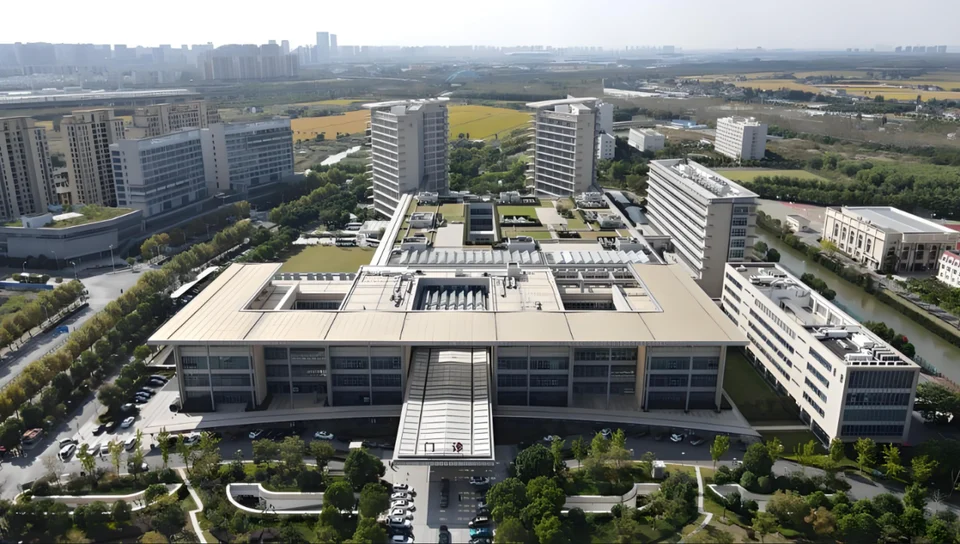
Photograph of Eastern Hepatobiliary Surgery Hospital
Eastern Hepatobiliary Surgery Hospital

Eastern Hepatobiliary Surgery Hospital

Hepatobiliary surgery
If liver cancer recurs after surgery or invades the portal vein, the possibility of repeat surgery and combined treatment can be assessed. The team has conducted a randomised controlled study of repeat resection versus minimally invasive ablation for recurrent liver cancer, and led research on preoperative radiotherapy combined with surgery for patients with portal vein tumour thrombus. Individual choices depend on liver function and tumour extent.
Use Shanghai expertise for a defined anatomical question
Bile duct cancer needs a different surgical discussion depending on whether it starts inside the liver, at the hilum or near the pancreas. Eastern Hepatobiliary Surgery Hospital has hepatobiliary cancer expertise that makes it a relevant starting point for intrahepatic disease. In Shanghai, original scans, drainage records and liver function can guide a referral to the hepatobiliary or pancreatic team best placed to compare resectability, the likely operation and other treatments. View original source
See hospital expertise

Clinical cases, services and research are identified separately. Published material does not confirm current availability or individual eligibility.

Care planning

Tell us what care you are looking for. We can help you understand hospital options, document requirements and travel arrangements.

Turn your treatment goal into a clear next step.

Before your visit

Organise existing test results and questions

When planning

Understand hospital locations, costs and appointment timing

After arriving in China

Translation and care coordination as agreed

The initial service consultation is free. Hospital care and any subsequent paid services are explained separately.

Records to prepare

Start with the records you already have. Your treating doctor will decide whether further tests are needed.

Biliary tract cancer

  • CT or MRI images showing the biliary tract and liver
  • Existing pathology, liver tests and records of biliary drainage or stents
  • Previous cancer treatment and current symptoms such as jaundice

Further reading

Explore the diagnosis, possible care paths and questions to ask your treating team.

Why bile duct cancer location changes a Shanghai surgical review
Does every bile duct cancer need a Whipple operation?

No. A Whipple operation is relevant mainly to selected distal tumors near the pancreatic head. Intrahepatic and perihilar tumors raise different surgical questions. The exact location, spread and fitness determine the operation, if an operation is appropriate. View original source View original source

If a stent improves jaundice, does that mean surgery is possible?

No. Drainage improves bile flow but does not establish cancer extent or surgical safety. The team still needs to assess anatomy, spread, remaining liver function and general condition before recommending cancer removal. View original source View original source

Is a Shanghai second opinion useful after being told surgery is impossible?

It can clarify which finding prevents surgery and whether further information could change that conclusion. Another review may confirm the original advice. Send the full imaging and prior opinion so the consultation addresses the disputed issue without delaying necessary local care. Bring the original contrast scans, drainage records and prior opinions so the Shanghai team can name the precise barrier to resection and other paths to consider. View original source View original source

Turn your treatment goal into a clear next step.

Tell us what care you are looking for. We can help you understand hospital options, document requirements and travel arrangements.

The initial service consultation is free. Hospital care and any subsequent paid services are explained separately.Treatment choices, eligibility and timing require an individual assessment by the hospital's clinical team.

Contact us

Your message opens in WhatsApp or your email app for you to review before sending. Please do not include a full medical record in the first message.

Contact us on WhatsApp Contact us by email
Sources and editorial notes

See the original sources behind the clinical and hospital information on this page.

  1. NCI — Bile duct cancer treatment

    View original source

  2. NCI — Bile duct cancer treatment, professional PDQ

    View original source

  3. NHS — Treatment for bile duct cancer

    View original source

  4. Shanghai Science and Technology — Eastern Hepatobiliary research profile, 2020

    View original source

See hospital expertiseContact us