
All conditions
English
English简体中文繁體中文TürkçeEspañolBahasa MelayuBahasa IndonesiaTiếng ViệtPortuguêsРусский

Complex colorectal polyps
Treatment options in Shanghai

Size alone does not choose the procedure. Learn how lesion appearance, cancer suspicion, pathology needs and prior treatment shape removal decisions.

Treatment choices, eligibility and timing require an individual assessment by the hospital's clinical team.
Editorial illustration for “Large or flat colorectal polyps: discussing EMR, ESD or surgery in Shanghai”
Large or flat colorectal polyps: discussing EMR, ESD or surgery in Shanghai

Find treatment options that fit your goal.

Explore specialist care, procedures and research relevant to this condition in Shanghai. Your treating team must confirm what is suitable for you.

Why EMR can remain appropriate for a large lesion

Explore treatment options

Endoscopic mucosal resection removes a lesion through the colonoscope, commonly using fluid to lift the tissue and a snare to cut it. A larger lesion may be removed in several pieces. The 2024 ESGE guideline supports EMR for many large nonpedunculated adenomatous polyps; size alone does not mean ESD is required. Piece-by-piece removal is a planned method in suitable cases, not automatically a failed operation. However, it affects how the specimen is interpreted and makes the follow-up plan for the treated site particularly important.

View original source View original source
When an intact specimen matters more

Explore treatment options

Endoscopic submucosal dissection uses a specialised cutting technique beneath the lesion to aim for removal in one piece. An intact specimen can be important when the team needs to evaluate suspected superficial invasion and resection margins. The choice depends on the lesion and the centre's expertise; ESD is not a universal upgrade for every flat polyp. Ask why one-piece removal is needed in your case and whether another technique could achieve the same clinical goal. Greater technical complexity must be weighed against the information and treatment benefit expected.

View original source View original source

When the discussion needs a colorectal surgeon

Explore treatment options

If invasive cancer is suspected or found, removing the visible polyp may not answer every cancer-management question. The depth and other pathological features may make further staging and surgical assessment necessary. Surgery may also be considered when safe, adequate endoscopic removal is not feasible. Conversely, being referred for an expert endoscopic opinion does not mean a cancer diagnosis has been made. Ask the team to explain which finding would change the plan from endoscopic treatment to surgery, both before removal and after the final pathology becomes available.

View original source View original source

Treatment choices, eligibility and timing require an individual assessment by the hospital's clinical team.

Choose a hospital with the right expertise.

Start with each specialty's standing, then see the specific care it offers for this condition. Renji Hospital

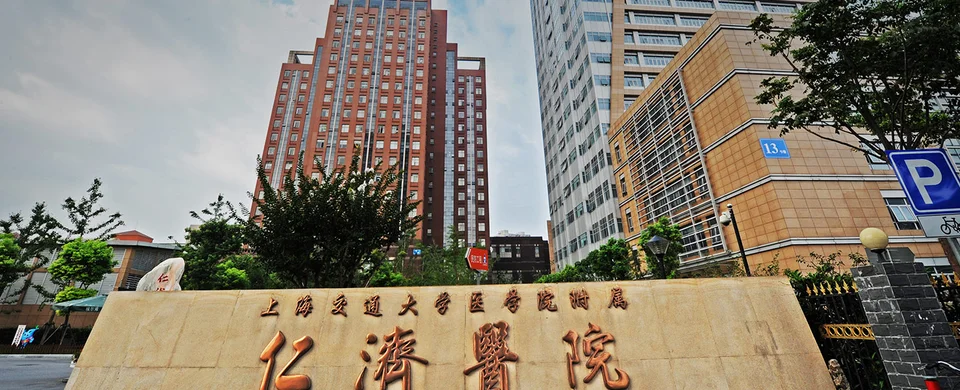
Photograph of Renji Hospital
Renji Hospital

Renji Hospital

Gastroenterology and digestive endoscopy
If gastroscopy, colonoscopy or pathology has already identified findings, explore gastrointestinal tumour risk assessment and endoscopic diagnosis and treatment.
How advanced endoscopy changes the polyp decision
Renji Hospital, Shanghai Jiao Tong University School of Medicine describes care for gastrointestinal precancerous lesions and early cancer, including EMR and ESD, in its hospital specialty overview. For a difficult colorectal polyp, Shanghai offers an advanced endoscopy opinion alongside pathology and colorectal surgery: is invasion suspected, could piecemeal removal be adequate, when does an intact specimen matter and when should surgery take over? Read about Complex colorectal polyps and bring original colonoscopy images and prior procedure reports so the decision concerns your lesion, not just the phrase “large polyp.” View original source
See hospital expertise

Clinical cases, services and research are identified separately. Published material does not confirm current availability or individual eligibility.

Care planning

Tell us what care you are looking for. We can help you understand hospital options, document requirements and travel arrangements.

Turn your treatment goal into a clear next step.

Before your visit

Organise existing test results and questions

When planning

Understand hospital locations, costs and appointment timing

After arriving in China

Translation and care coordination as agreed

The initial service consultation is free. Hospital care and any subsequent paid services are explained separately.

Records to prepare

Start with the records you already have. Your treating doctor will decide whether further tests are needed.

Complex colorectal polyps

  • Colonoscopy photographs, reports and the exact lesion location
  • All biopsy or resection pathology, including previous incomplete removals
  • Previous abdominal operations and current antiplatelet or anticoagulant medicines

Further reading

Explore the diagnosis, possible care paths and questions to ask your treating team.

Large or flat colorectal polyps: discussing EMR, ESD or surgery in Shanghai
Is ESD always better than EMR for a flat polyp?

No. The decision depends on cancer suspicion, whether an intact specimen is needed, the lesion's features and local expertise. EMR is appropriate for many large lesions; the relevant question is which method safely addresses the clinical objective. View original source View original source View original source

Does a benign biopsy exclude cancer in the whole polyp?

A biopsy samples only part of the lesion. The complete endoscopic assessment and pathology of the removed tissue may provide additional information. Ask what uncertainty remains and how the final result could change further treatment. View original source View original source

If removal is complete, can I skip follow-up?

Not automatically. The team may recommend a scar-site check and further colon surveillance based on the procedure and final pathology. Obtain the written plan and clarify who will arrange it after you return home. View original source View original source View original source

Turn your treatment goal into a clear next step.

Tell us what care you are looking for. We can help you understand hospital options, document requirements and travel arrangements.

The initial service consultation is free. Hospital care and any subsequent paid services are explained separately.Treatment choices, eligibility and timing require an individual assessment by the hospital's clinical team.

Contact us

Your message opens in WhatsApp or your email app for you to review before sending. Please do not include a full medical record in the first message.

Contact us on WhatsApp Contact us by email
Sources and editorial notes

See the original sources behind the clinical and hospital information on this page.

  1. ESGE: colorectal polypectomy and EMR guideline update 2024, PubMed abstract

    View original source

  2. Leeds Teaching Hospitals: endoscopic mucosal resection

    View original source

  3. Leeds Teaching Hospitals: endoscopic submucosal dissection

    View original source

  4. Renji Hospital: gastroenterology department

    View original source

  5. NHS: bowel polyps

    View original source

See hospital expertiseContact us